The 20-yard sits in the middle of the five roll-off sizes: the 10-yard is $595, the 15-yard $650, the 20-yard $695, the 30-yard $795, and the 40-yard $895. A 20-yard dumpster suits a full-room renovation, a two-car…
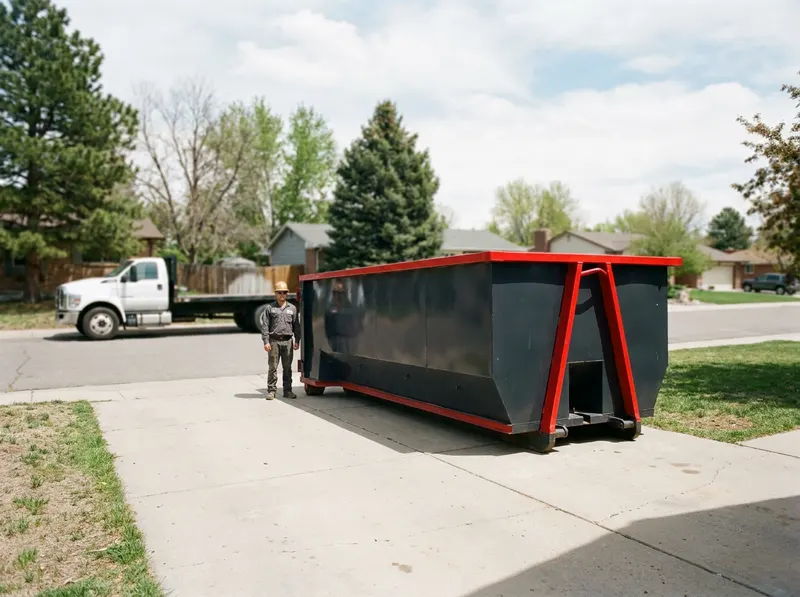
The 20-yard sits in the middle of the five roll-off sizes: the 10-yard is $595, the 15-yard $650, the 20-yard $695, the 30-yard $795, and the 40-yard $895. A 20-yard dumpster suits a full-room renovation, a two-car garage cleanout in Berkeley, a single-layer roof tear-off up to about 2,000 square feet, or a mid-size estate clearout in Capitol Hill. If the job is a single-bathroom remodel or a small basement purge, the 10-yard is enough and saves $100; if it is a whole-house gut or a new-construction framing haul in Stapleton (Central Park), step up to the 30-yard so debris volume does not outrun the box.
The trade-off is driveway footprint against debris volume, a 20-yard needs roughly 22 feet of clear space plus room for the rear door to swing open.
A 20-yard measures about 22 ft long by 8 ft wide by 4.5 ft tall. Most standard Denver driveways in neighborhoods like Highlands (LoHi), Sloan's Lake, and Cherry Creek hold it with room to spare. The lower 4.5-ft walls make it easier to load heavy items over the side than the taller 30- and 40-yard boxes.
Placement on a public street, common on the narrow lots in Baker and parts of Capitol Hill, requires a right-of-way permit from the Denver Department of Transportation and Infrastructure; on a private driveway no permit is needed.
The $695 covers delivery, a set rental window, pickup, and disposal with a 2-ton included weight allowance. Heavy materials fill the weight limit faster than the volume limit, concrete, dirt, brick, and roofing shingles are dense, so a 20-yard loaded with clean concrete can hit 2 tons while only half full. Dense inert debris is best kept to a dedicated lighter load.
The EPA's guidance on construction and demolition materials notes that concrete, wood, and drywall make up the bulk of renovation waste by weight. Prohibited items follow Colorado rules: no household hazardous waste, no liquids, no tires, no vehicle batteries, no wet paint, no appliances containing refrigerant, and no electronics covered by Colorado's electronics recycling rules. Mattresses and tires may be accepted for an extra per-item fee confirmed before drop-off.
Step 1: confirm the size by the job, text a photo of the pile to (720) 606-7918 or describe the project.
Step 2: set a drop date; Denver deliveries run Monday through Saturday, same-day when the schedule allows. Step 3: clear about 22 feet of driveway or secure a street permit. Step 4: load the debris, keeping it level with the top rail so nothing overhangs, overloaded or heaped boxes cannot be legally hauled per federal load-securement standards.
Step 5: call for pickup, or let it go on the scheduled end date. A dumpster rental is self-service, you load it yourself; it is not junk removal where a crew carries items out. Boards protect the driveway surface under the roll-off wheels.
For disposal and recycling options beyond the dumpster, Earth911's recycling directory lists Denver-area drop sites, and the Denver Solid Waste Management division sets what the city landfill accepts. Jobsite debris handling also falls under OSHA 1926 construction standards for contractors in Montbello and Park Hill work zones.
Every job gets a firm, written price after an on-site visit.
Tell us about your 20-yard dumpster job in Denver and we'll send a clear, written quote, usually the same day.
 Ridgeback Dumpster Rental